

Unsheltered homelessness remains one of the most visible and urgent crises facing communities across the United States. Individuals living outside, on the streets, in vehicles, or in encampments face severe vulnerabilities — including profound health risks, exposure to violence, and the daily trauma of survival. Meanwhile, local jurisdictions operate in a high-pressure environment, often constrained by underfunding, service delivery gaps, an overburdened workforce, and complex administrative hurdles. Compounding these challenges, many communities face shifting political winds and public pressure to eliminate the visibility of unsheltered homelessness.
Despite the complexity of this crisis, unsheltered homelessness is not an intractable problem. Pairing immediate access to low-barrier interim or permanent housing with comprehensive supportive services is the most effective way to address unsheltered homelessness. When communities use collaborative, data-informed planning and then pilot or test innovation, they can build scalable solutions capable of permanently moving people out of crisis while preventing the recurrence of unsheltered homelessness elsewhere in the area.
In TAC’s work on this issue, my colleagues and I have seen firsthand how the unsheltered climate varies significantly across the country, with differences both in how unsheltered homelessness appears, and in the mix of partners and resources available to address the situation. TAC has been honored to walk alongside leaders in urban centers, rural communities, and metro-suburbs that are striving to address and eliminate unsheltered homelessness; these communities are testing and piloting innovative strategies and partnerships to provide people with options that not only meet their needs, but permanently address their homelessness crisis.
Figuring Out What Works — Real-World Examples
TAC has worked extensively with the City of Boston in the last five years to address unsheltered homelessness through a variety of innovations. Our roles have included project-managing the resolution of a large, recurring, and complex encampment; designing and implementing low-threshold shelter models for people with the longest-term unsheltered histories in the city; and forging partnerships between housing and health care providers to serve people who have both long-term unsheltered histories and complex care needs. It is important to recognize the incredible gains the city has made in its work to eliminate unsheltered homelessness — including multiple decreases in Boston’s unsheltered point-in-time count, the sustainability of its encampment resolution approach (to date, three years later, the largest encampment has not reappeared), and leveraging partnerships with affordable housing and health care providers to house about 200 people with the longest histories of unsheltered homelessness in the last two years.
As a lead technical assistance provider for HUD’s Supplemental Funding Opportunity to Address Unsheltered and Rural Homelessness (SNOFO), TAC worked with Chicago, New Orleans, Boston, communities throughout California and Texas, and the state of Connecticut to design custom innovative housing and outreach models; adapt coordinated entry systems; and structure compassionate, highly effective encampment resolution pathways. These efforts included cross-disciplinary, system-wide outreach coordination and collaboration; establishing outreach best practice standards; scaling up housing problem-solving across outreach providers; running housing surges to house people with complex care needs; and enhancing and supplementing tenancy support services to support people once they move into housing.
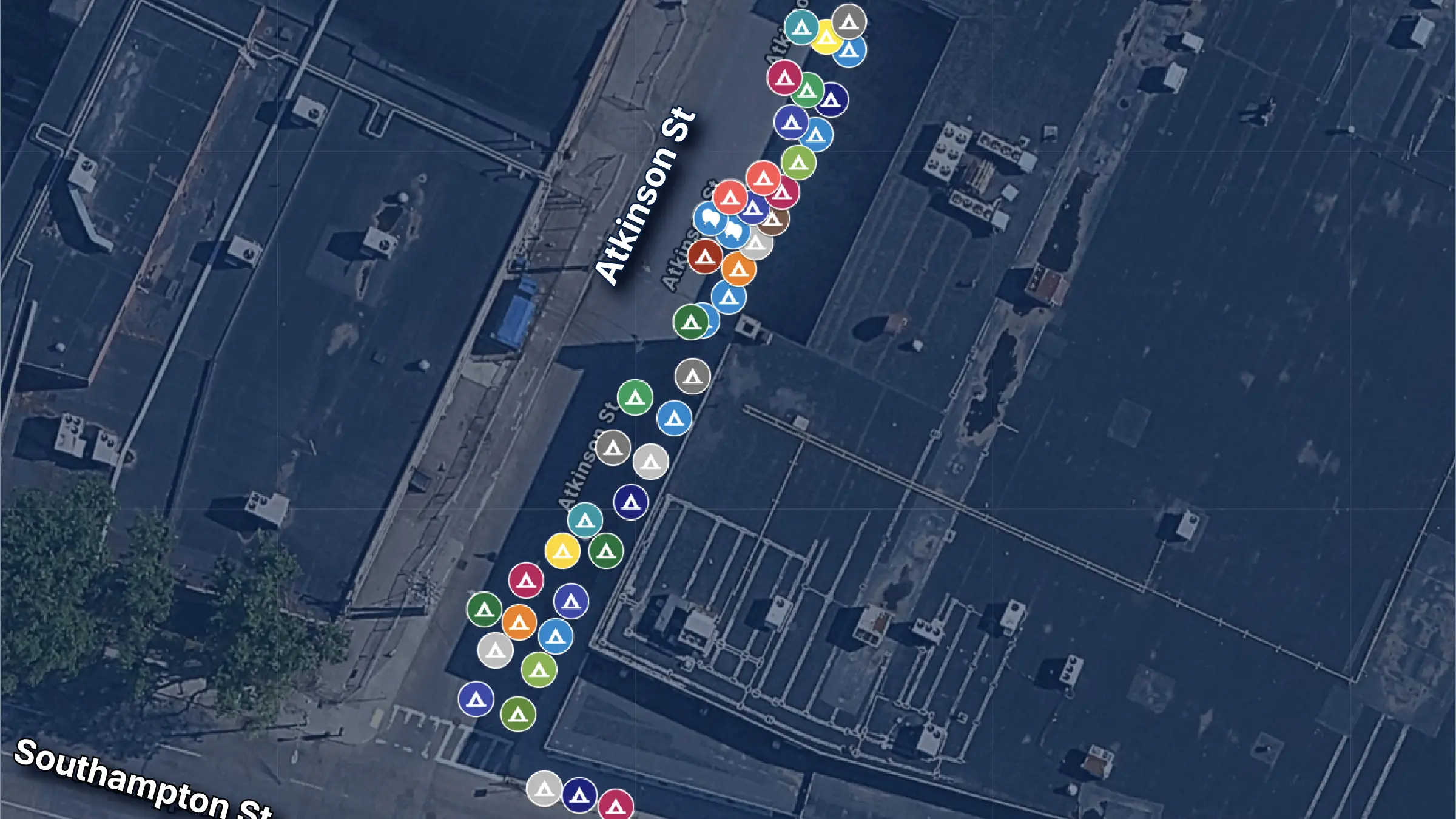
This map was generated and edited for readability to support a coordinated effort to address unsheltered homelessness in Boston, Mass.
Sharing the Knowledge
TAC’s experience working with communities on these issues has enabled us to share what we know about innovations and lessons learned in addressing unsheltered homelessness by offering group learning opportunities for policymakers and practitioners across the country. This past spring, TAC brought together 24 communities to learn how to adapt their coordinated entry processes to better serve unsheltered populations. Additionally, TAC worked closely with the state of Pennsylvania’s Office of Mental Health and Substance Abuse Services to provide webinars and peer learning cohorts for practitioners in the behavioral health and housing fields; participants were able to learn, share, and troubleshoot with each other how to address unsheltered homelessness in their respective communities, with a focus on encampment resolution, housing problem-solving, and supporting partnerships between housing and behavioral health systems.
Accepting the Challenge
Taking on the crisis of unsheltered homelessness requires deep system knowledge, intentional resource alignment, and a willingness to forge unconventional partnerships. We know that by strategically aligning resources, maximizing federal and local funding, and implementing multidisciplinary interventions, communities can transition individuals safely from the streets into stable living environments. While the work is demanding, seeing communities transition from fragmented emergency responses to highly coordinated systems is deeply inspiring. Equipped with the right data, evidence-based practices, and collaborative support, communities nationwide are proving that ending unsheltered homelessness is achievable when we work together to empower individuals to live healthy, independent lives.

